
 EN
EN

Industrial environments demand electronic components that can withstand extreme conditions, deliver consistent performance, and maintain reliability over extended operational lifespans. Among the various circuit board technologies available, rigid PCB stands out as the preferred choice for industrial applications due to its robust construction, thermal stability, and proven track record in demanding settings. Understanding what makes rigid PCB particularly suited for industrial use requires examining its fundamental characteristics, performance advantages, and the specific challenges it addresses in manufacturing, automation, energy, and transportation sectors.
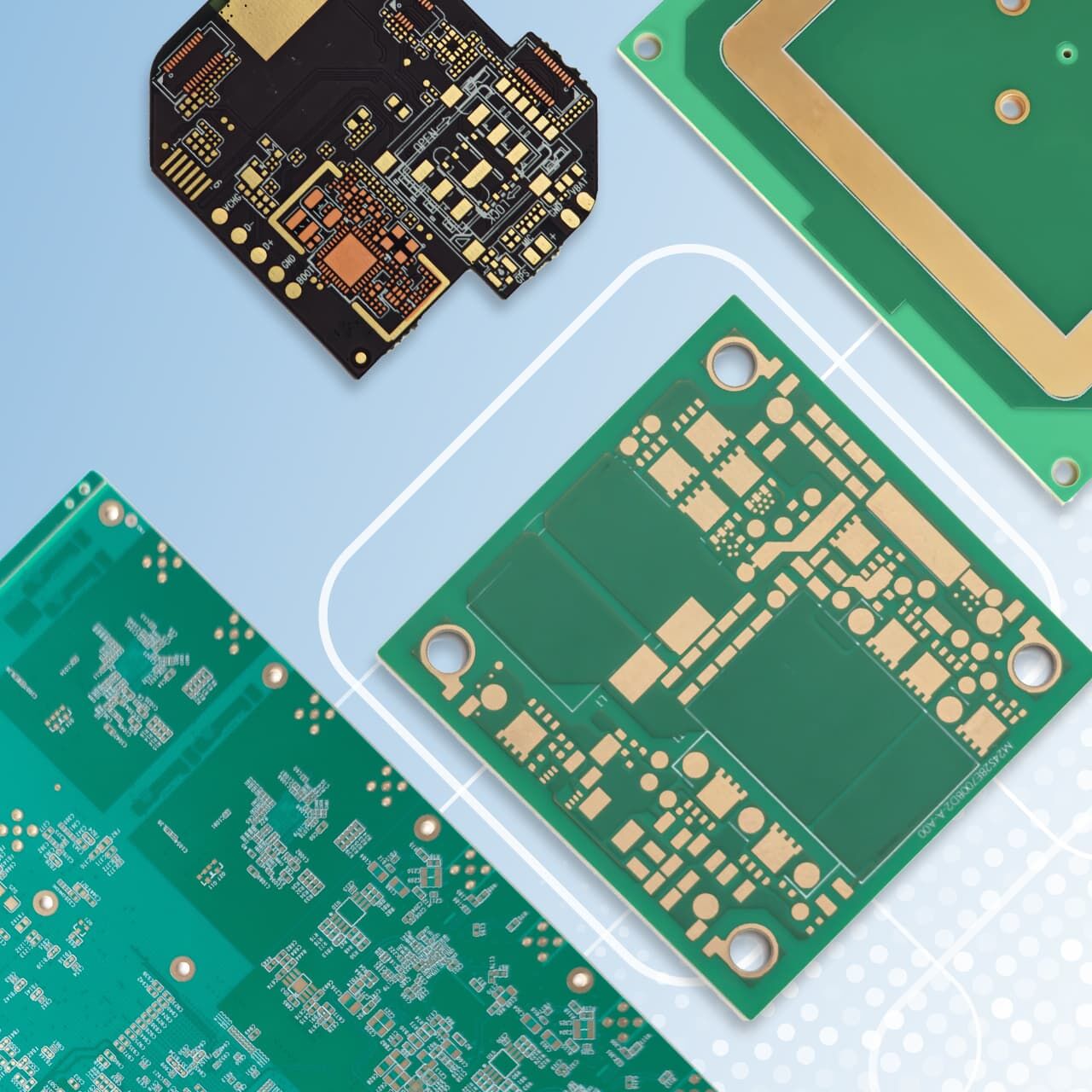
The unique combination of mechanical strength, electrical performance, and manufacturing scalability positions rigid PCB as the backbone of industrial electronics. Unlike flexible or semi-rigid alternatives, rigid PCB offers dimensional stability that remains constant across temperature fluctuations, vibration exposure, and mechanical stress—all common conditions in factory floors, process control systems, and heavy machinery. This article explores the specific attributes that make rigid PCB the ideal solution for industrial applications, examining material properties, design advantages, environmental resilience, and long-term operational benefits that directly address the requirements of industrial electronics.
Structural Integrity and Mechanical Durability
Material Composition and Physical Strength
The foundation of rigid PCB superiority in industrial settings begins with its material composition. Rigid PCB typically utilizes FR-4 substrate, a glass-reinforced epoxy laminate that provides exceptional mechanical strength and dimensional stability. This substrate material combines woven fiberglass cloth with epoxy resin, creating a composite structure that resists bending, flexing, and physical deformation even under substantial mechanical loads. The glass transition temperature of quality FR-4 materials exceeds 130°C, ensuring the PCB maintains its structural integrity during both manufacturing processes and operational conditions typical in industrial environments.
Industrial machinery often subjects electronic components to continuous vibration, periodic shock loads, and mounting stress that would compromise less robust circuit board technologies. The rigid construction of these PCB assemblies ensures components remain securely positioned and electrical connections stay intact throughout the equipment's service life. The substrate thickness in industrial rigid PCB typically ranges from 1.6mm to 3.2mm, providing substantial mechanical support for heavy components such as power transformers, large capacitors, and industrial connectors that characterize control systems and power electronics.
Component Mounting Stability
Industrial applications frequently require mounting of through-hole components, high-power devices, and industrial-grade connectors that impose significant mechanical stress on the PCB structure. Rigid PCB provides the necessary support for these components through its inflexible substrate that distributes mechanical loads evenly across the board structure. The plated through-holes in rigid PCB create robust mechanical anchoring points that withstand the insertion forces during assembly and maintain connection integrity during thermal cycling and vibration exposure throughout operational life.
The component density achievable on rigid PCB allows industrial designers to consolidate functionality while maintaining adequate spacing for heat dissipation and serviceability. Unlike flexible circuits that may require additional mechanical support structures, rigid PCB serves as both the electrical interconnection medium and the mechanical chassis for component mounting. This dual functionality reduces assembly complexity, eliminates additional support hardware, and contributes to overall system reliability by minimizing the number of mechanical interfaces that could potentially fail in harsh industrial environments.
Resistance to Physical Deformation
Industrial equipment operates in environments where temperature gradients, mechanical vibration, and installation stresses are routine conditions rather than exceptional circumstances. Rigid PCB maintains consistent geometry across these variable conditions, ensuring that connectors remain properly aligned, mounting holes stay positioned accurately, and component clearances remain within design specifications. The dimensional stability of rigid PCB across its operational temperature range prevents the warping and bowing that could cause intermittent connections, component stress, or assembly interference in industrial control cabinets and machine-mounted electronics.
The coefficient of thermal expansion in quality rigid PCB substrates is carefully controlled to match that of copper traces and component leads, minimizing stress at solder joints during temperature cycling. This thermal expansion matching proves particularly critical in industrial applications where equipment may experience daily temperature swings between ambient conditions and elevated operating temperatures. The rigid structure prevents the micro-movements that could fatigue solder joints over thousands of thermal cycles, contributing directly to the extended service life required in industrial installations where equipment replacement involves production downtime and significant cost.
Thermal Management and Environmental Resilience
Heat Dissipation Capabilities
Industrial electronics frequently handle substantial power levels, whether in motor control applications, power conversion systems, or process control equipment. Rigid PCB provides superior thermal management compared to alternative technologies through its solid substrate structure that facilitates heat conduction away from power components toward heat sinks, chassis mounting points, or cooling systems. The thermal conductivity of standard FR-4 rigid PCB substrate, while modest at approximately 0.3 W/mK, proves sufficient for most industrial applications when combined with proper thermal design including copper pour areas, thermal vias, and component placement strategies.
For higher power industrial applications, rigid PCB technology accommodates enhanced thermal management through metal core substrates, thicker copper layers, and thermal via arrays that improve heat spreading and dissipation. The rigid structure allows direct mounting to metal enclosures and heat sinks using thermal interface materials that require consistent pressure and contact—requirements difficult to meet with flexible circuit technologies. Industrial PCB designs often incorporate copper weights ranging from 2 oz to 6 oz per square foot, providing both current-carrying capacity for power applications and enhanced thermal conduction paths that distribute heat across the board area rather than concentrating thermal stress at individual component locations.
Temperature Tolerance and Stability
Industrial environments subject electronics to temperature extremes that exceed the conditions typical in consumer or commercial applications. Rigid PCB manufactured with appropriate substrate materials and processing techniques operates reliably across temperature ranges from -40°C to +125°C, covering the operational requirements of most industrial installations including outdoor equipment, process heating applications, and cold storage facilities. The glass transition temperature of the substrate material determines the maximum temperature at which the PCB maintains its mechanical properties, and industrial-grade rigid PCB utilizes high-Tg materials that preserve dimensional stability and mechanical strength even when exposed to elevated temperatures during operation or manufacturing processes.
The thermal cycling resistance of rigid PCB proves essential for industrial applications where equipment experiences repeated heating and cooling cycles throughout its service life. Quality rigid PCB assemblies withstand thousands of thermal cycles between temperature extremes without developing solder joint fatigue, copper trace delamination, or substrate degradation. This thermal cycling endurance stems from the matched thermal expansion properties between substrate, copper, and solder mask materials, combined with the mechanical rigidity that prevents flexing during thermal expansion. Industrial equipment designed around rigid PCB technology achieves service lives measured in decades rather than years, reducing total cost of ownership through extended replacement intervals.
Chemical and Moisture Resistance
Industrial settings expose electronics to chemical contaminants, cleaning agents, and moisture levels that would quickly degrade unprotected circuit boards. Rigid PCB substrate materials exhibit excellent chemical resistance to most industrial fluids including hydraulic oils, coolants, and cleaning solvents commonly encountered in manufacturing environments. The conformal coatings and solder mask materials applied to industrial rigid PCB provide additional protection against moisture ingress, chemical attack, and environmental contamination that could otherwise cause corrosion, electromigration, or insulation breakdown.
Moisture absorption in PCB substrates can degrade electrical performance and compromise reliability through several mechanisms including reduced insulation resistance, increased dielectric losses, and electrochemical corrosion. Industrial-grade rigid PCB materials maintain low moisture absorption rates even under sustained exposure to high humidity conditions, preserving electrical performance and preventing the delamination that can occur when absorbed moisture vaporizes during thermal excursions. The solid, non-porous structure of rigid PCB substrates provides inherently better moisture resistance compared to some alternative materials, contributing to reliable long-term operation in humid industrial environments including pulp and paper mills, food processing facilities, and outdoor installations.
Electrical Performance and Signal Integrity
Controlled Impedance and Signal Quality
Modern industrial systems increasingly incorporate high-speed communication interfaces, precision analog signals, and digital control systems that demand consistent electrical performance. Rigid PCB technology enables precise control of trace impedance, coupling, and propagation delay through its uniform substrate thickness, consistent dielectric properties, and dimensional stability. The rigid structure maintains constant spacing between signal traces and reference planes throughout manufacturing and operation, ensuring that the impedance characteristics engineered into the design remain stable across environmental variations and throughout the product's operational life.
Industrial applications including motion control systems, industrial networking equipment, and distributed control systems rely on signal integrity that rigid PCB readily provides. The homogeneous substrate material offers predictable dielectric constant and loss tangent values that simplify the design of controlled impedance transmission lines for differential signaling standards such as RS-485, CAN bus, and industrial Ethernet protocols. The mechanical stability of rigid PCB prevents the geometry variations that could cause impedance discontinuities, signal reflections, or timing skew in critical communication paths that coordinate industrial processes or transfer sensor data.
Power Distribution and Current Carrying
Industrial electronics must distribute substantial power to motors, actuators, heaters, and other electrical loads while maintaining voltage regulation and minimizing resistive losses. Rigid PCB accommodates heavy copper layers ranging from 2 oz to 10 oz per square foot, providing the current-carrying capacity required for power distribution within industrial control systems. The rigid substrate supports these heavy copper layers without warping during manufacturing, and maintains their flatness during operation despite the thermal expansion forces generated by high current flow.
The multiple layer capability of rigid PCB technology allows designers to dedicate entire layers to power and ground planes, creating low-impedance distribution networks that maintain stable supply voltages even when loads change rapidly. This power distribution architecture proves particularly valuable in industrial motion control applications where motor drivers draw pulsed currents that could cause voltage droops and noise on inadequately designed power distribution networks. The solid reference planes in multilayer rigid PCB also provide effective shielding for sensitive signal traces, reducing electromagnetic interference that could otherwise compromise measurement accuracy or communication reliability in industrial installations.
Insulation and Electrical Isolation
Industrial applications frequently require electrical isolation between different circuit sections, whether for safety reasons in power conversion equipment or for noise immunity in measurement circuits. Rigid PCB substrate materials provide excellent electrical insulation with breakdown voltages exceeding several kilovolts per millimeter of thickness, enabling designers to implement appropriate isolation barriers within the PCB structure. The dielectric strength of FR-4 rigid PCB material combined with proper creepage and clearance distances in the layout design ensures compliance with industrial safety standards including IEC 61010 and UL 61010 for equipment operating at hazardous voltages.
The insulation resistance of rigid PCB remains high even under elevated temperature and humidity conditions typical in industrial environments. This sustained insulation performance prevents leakage currents that could cause measurement errors in sensor interfaces, create safety hazards in power systems, or enable electrostatic discharge paths that damage sensitive components. Industrial control systems rely on this insulation integrity to maintain functional separation between digital control circuits, analog measurement channels, and power switching sections—all integrated onto a single rigid PCB assembly through careful design and layout practices.
Manufacturing Scalability and Cost Effectiveness
Established Production Infrastructure
The industrial electronics market benefits from the mature manufacturing infrastructure that has developed around rigid PCB technology over decades of continuous refinement. PCB fabrication facilities worldwide maintain extensive capabilities for producing rigid boards across a wide range of layer counts, sizes, and specifications, ensuring competitive pricing and reliable supply chains for industrial equipment manufacturers. This established production capacity enables rapid prototyping during product development and seamless scaling to volume production once designs are proven, supporting industrial product lifecycles that may span years from initial concept to market introduction.
The standardization of rigid PCB manufacturing processes, materials, and quality standards provides industrial designers with confidence that boards produced by different fabricators will meet consistent specifications. This manufacturing consistency proves essential for industrial products that require multiple sources to ensure supply continuity or that are produced across different geographic regions. The widespread availability of rigid PCB fabrication services also supports aftermarket service and repair operations, allowing industrial equipment manufacturers to procure replacement boards throughout extended product support periods that may extend decades beyond initial production.
Assembly and Testing Efficiency
Industrial electronics assembly processes are optimized for rigid PCB technology, with automated pick-and-place equipment, reflow soldering systems, and inspection machinery designed around the handling characteristics of rigid boards. The flat, stable surface of rigid PCB enables accurate component placement and consistent solder joint formation across high-mix production environments typical of industrial equipment manufacturing. Through-hole components common in industrial designs mount reliably into rigid PCB through automated insertion equipment or manual assembly processes, with the rigid substrate providing consistent support during wave soldering or selective soldering operations.
The rigid structure facilitates comprehensive testing and inspection procedures that verify both electrical functionality and assembly quality. Automated optical inspection systems accurately detect component placement errors and solder defects on the flat, dimensionally stable surface of rigid PCB. In-circuit testing and functional test fixtures rely on the precise positioning of test points and the rigid structure that ensures consistent probe contact without flexing that could cause intermittent connections during testing. These testing capabilities prove essential for industrial products where field failures carry significant cost implications through equipment downtime, emergency service calls, and potential safety consequences.
Long-term Cost Benefits
While flexible and rigid-flex PCB technologies offer advantages for specific applications, rigid PCB provides superior cost-effectiveness for the majority of industrial electronics where mechanical flexibility is not required. The material costs, manufacturing yields, and assembly efficiency of rigid PCB result in lower total product costs for industrial equipment, enabling competitive pricing without compromising reliability or performance. Industrial products typically face price-sensitive markets where equipment buyers evaluate total cost of ownership including initial purchase price, operating costs, and maintenance expenses over extended service lives.
The reliability and longevity of rigid PCB translate directly into lower lifecycle costs through reduced warranty claims, extended service intervals, and decreased spare parts inventory requirements. Industrial equipment manufacturers recognize that the initial cost savings from using rigid PCB multiply across the product lifecycle through fewer field failures, lower support costs, and enhanced customer satisfaction that drives repeat business and market reputation. The proven track record of rigid PCB in industrial applications provides risk mitigation that alternative technologies have yet to demonstrate at comparable scales and across equivalent application diversity.
Application-Specific Advantages in Industrial Sectors
Factory Automation and Robotics
Industrial automation systems depend on rigid PCB to deliver the combination of reliability, performance, and cost-effectiveness required for programmable logic controllers, motor drives, human-machine interfaces, and sensor networks that coordinate modern manufacturing operations. The vibration resistance of rigid PCB proves essential in robotics applications where circuit boards mount directly to moving mechanisms subject to continuous acceleration and deceleration cycles. Control systems built on rigid PCB technology maintain precise motion coordination and timing accuracy throughout millions of operational cycles, enabling the productivity improvements and quality consistency that justify automation investments.
The thermal management capabilities of rigid PCB support the power electronics that drive industrial motors and actuators, dissipating heat generated during continuous operation or managing thermal stress during frequent start-stop cycles in pick-and-place applications. Industrial networking protocols implemented on rigid PCB enable distributed control architectures that scale from small machines to plant-wide automation systems, with rigid PCB providing the signal integrity and electrical robustness required for reliable communication in electrically noisy factory environments dominated by motor drives, welding equipment, and high-power machinery.
Process Control and Instrumentation
Chemical processing, petroleum refining, and utility operations rely on instrumentation and control systems that must maintain accuracy and reliability in challenging environments. Rigid PCB enables the design of measurement circuits with sufficient stability and noise immunity to maintain sensor accuracy despite electromagnetic interference from pumps, motors, and power distribution systems. The temperature tolerance of industrial rigid PCB ensures that transmitters, controllers, and data acquisition systems continue operating accurately even when installed in areas subject to process heat or exposure to outdoor temperature extremes.
Safety-critical process control systems require the proven reliability that rigid PCB technology delivers through decades of application history in nuclear power plants, chemical production facilities, and emergency shutdown systems. The long-term stability of rigid PCB ensures that safety systems remain functional throughout extended intervals between testing and maintenance, while the resistance to environmental degradation provides confidence that emergency systems will operate correctly when called upon after years of standby service. Regulatory compliance for process industries frequently references established standards that rigid PCB technology readily satisfies through documented material properties, manufacturing processes, and qualification testing.
Power Generation and Distribution
Electrical power systems from generation through transmission and distribution rely extensively on control and protection equipment built around rigid PCB technology. The electrical isolation and insulation performance of rigid PCB enables implementation of safety barriers between high-voltage circuits and low-voltage control systems, protecting personnel and equipment while maintaining the signal integrity required for accurate measurement and control. Power conversion equipment including inverters, rectifiers, and power supplies for renewable energy systems utilizes rigid PCB with heavy copper layers to handle substantial currents while maintaining compact form factors and efficient thermal management.
Grid infrastructure equipment must operate reliably for decades with minimal maintenance, making the proven longevity of rigid PCB essential for controlling costs while ensuring system reliability. Smart grid technologies including advanced metering, distribution automation, and demand response systems depend on rigid PCB to provide the communication interfaces, processing capability, and environmental resilience required for outdoor installations across diverse climate zones. The established qualification testing protocols for rigid PCB align well with utility industry standards and procurement practices, facilitating specification compliance and product acceptance in conservative markets that prioritize proven technology over novel approaches.
FAQ
Why is rigid PCB preferred over flexible PCB for most industrial applications?
Rigid PCB offers superior mechanical strength, better thermal management, lower cost, and proven long-term reliability compared to flexible PCB for industrial applications that do not require the bending or flexing capabilities of flexible circuits. The solid substrate of rigid PCB provides stable component mounting, consistent electrical performance, and durability against vibration and mechanical stress typical in industrial environments. Manufacturing infrastructure for rigid PCB is more widely established, resulting in better availability, shorter lead times, and more competitive pricing for industrial production volumes. While flexible PCB serves specific applications requiring mechanical flexibility, rigid PCB delivers better overall value for the majority of industrial electronics where flexibility provides no functional advantage.
What temperature range can industrial rigid PCB withstand during operation?
Industrial-grade rigid PCB typically operates reliably across temperatures from -40°C to +125°C, covering the requirements of most industrial installations including outdoor equipment and process control applications. The specific temperature capability depends on the substrate material grade, with standard FR-4 supporting operation to 130°C and high-temperature laminates extending capability to 170°C or higher for specialized applications. The glass transition temperature of the substrate material determines the maximum temperature at which the PCB maintains mechanical properties, while the minimum temperature capability is generally limited by component specifications rather than PCB substrate properties. Proper design practices including appropriate component selection, thermal management, and conformal coating application ensure reliable operation across the required temperature range for specific industrial applications.
How does rigid PCB contribute to the long service life required in industrial equipment?
Rigid PCB contributes to extended service life through several complementary mechanisms including dimensional stability that prevents stress on solder joints during thermal cycling, mechanical rigidity that resists vibration fatigue, chemical resistance that protects against environmental degradation, and electrical insulation that maintains performance under long-term stress. The matched thermal expansion between substrate and copper minimizes thermally induced stress that could eventually fatigue solder connections or cause delamination. Industrial rigid PCB manufactured with high-quality materials and appropriate processing techniques routinely achieves service lives exceeding twenty years in properly designed equipment, with failures typically occurring in active components or mechanical elements rather than the PCB structure itself. This longevity reduces total cost of ownership for industrial equipment by extending intervals between replacement or refurbishment.
Can rigid PCB meet the electromagnetic compatibility requirements of industrial standards?
Yes, rigid PCB technology provides multiple design features that facilitate compliance with industrial electromagnetic compatibility standards including IEC 61000 series requirements for emissions and immunity. The multilayer construction capability of rigid PCB enables designers to implement continuous ground planes that provide effective shielding for sensitive signals and reduce radiated emissions from high-speed circuits. Proper component placement, trace routing practices, and power distribution design on rigid PCB minimize electromagnetic interference generation while strategic use of filtering components and layout techniques enhances immunity to external disturbances. Industrial equipment incorporating rigid PCB designed according to established EMC principles routinely passes certification testing for industrial environments, with the rigid structure maintaining consistent electromagnetic performance throughout the product's operational life despite exposure to vibration and thermal stress that could degrade performance in less robust circuit technologies.
Table of Contents
- Structural Integrity and Mechanical Durability
- Thermal Management and Environmental Resilience
- Electrical Performance and Signal Integrity
- Manufacturing Scalability and Cost Effectiveness
- Application-Specific Advantages in Industrial Sectors
-
FAQ
- Why is rigid PCB preferred over flexible PCB for most industrial applications?
- What temperature range can industrial rigid PCB withstand during operation?
- How does rigid PCB contribute to the long service life required in industrial equipment?
- Can rigid PCB meet the electromagnetic compatibility requirements of industrial standards?